Terra Plants and Flowers
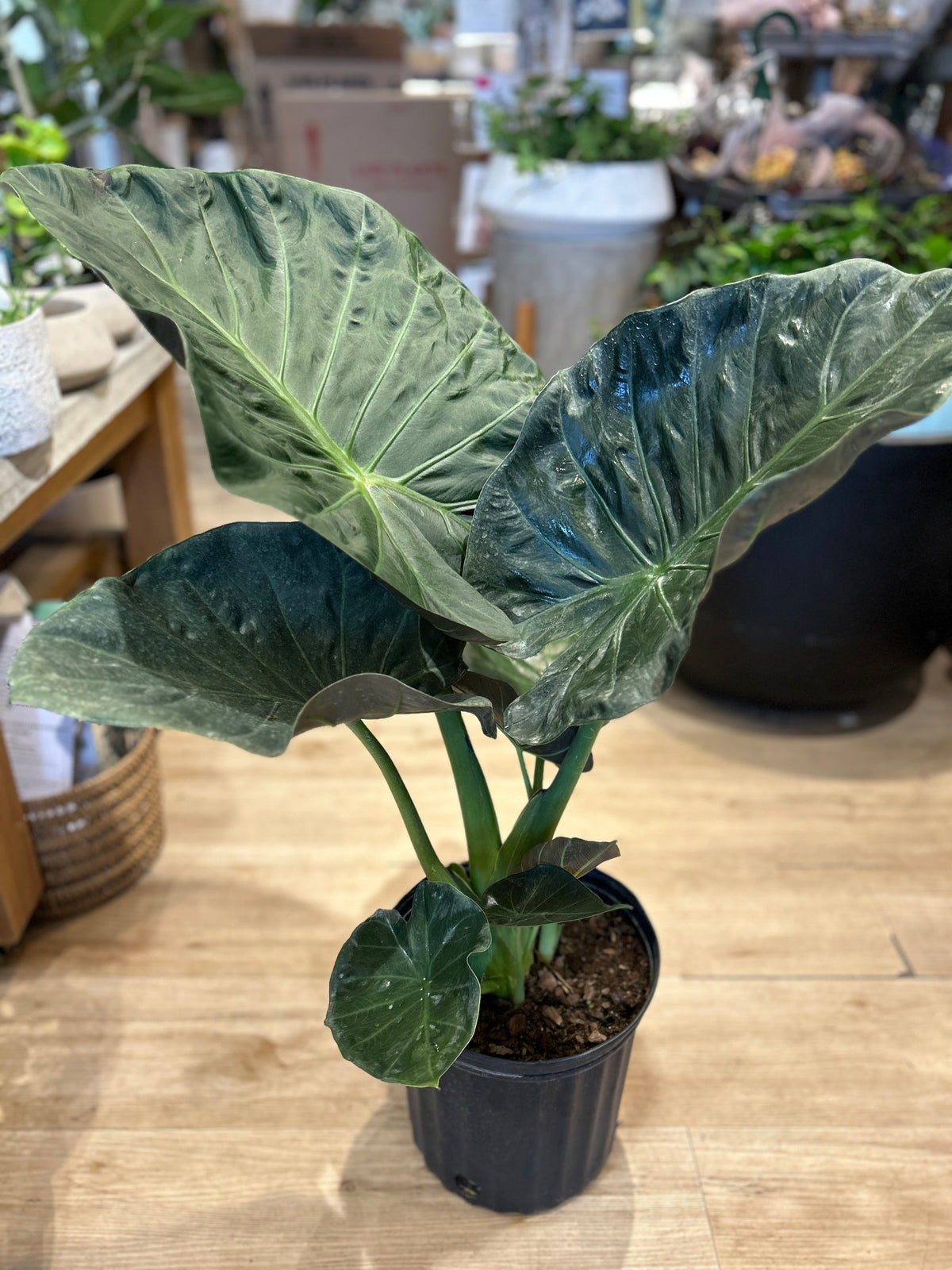
Alocasia regal shield 10" pot
Alocasia regal shield 10" pot
Couldn't load pickup availability
Alocasia regal shield
Alocasia 'Regal Shields' is the hybrid cross of Alocasia odora and Alocasia reginula aka "Black Velvet". Getting it's cold tolerance and larger stature from odora, and it's unique coloration and pleating from reginula, 'Regal Shields' is the perfect combination of both of these plants!
🌿 Alocasia ‘Regal Shields’
Alocasia ‘Regal Shields’ has large, shield-shaped leaves in deep green, with lighter veins and rich maroon undersides. Its upright stems and broad foliage bring a tropical feel to a bright living room or office. Give it room to grow, as its leaves become more impressive with maturity.
☀️ Light Requirements
Prefers bright, indirect light. Place near a bright window with a sheer curtain to soften strong sunlight. Avoid harsh afternoon sun, which can scorch the leaves.
💧 Watering & Soil
Water when the top 5 cm (2″) of soil feels dry, without letting the entire root ball dry out. Water thoroughly, allow excess water to drain, and empty the saucer. Use an airy, well-draining potting mix with bark and perlite that still holds some moisture. Check the soil before watering, as it usually dries more slowly during winter.
🌡️ Temperature & Humidity
Thrives in warm conditions around 18–25°C and enjoys higher humidity. Keep away from cold drafts, heating vents, and cold window glass. A nearby humidifier can help during dry winter months.
🌱 Care Level
Moderate — needs consistent warmth, good light, and a balance of moisture and drainage. Growth may slow during winter, so adjust watering to match how quickly the soil dries.
🐾 Pet Safety — Toxic to Cats & Dogs
Toxic to cats and dogs if chewed or eaten. Insoluble calcium oxalate crystals can cause mouth irritation, swelling, drooling, vomiting, and difficulty swallowing. Keep out of reach and contact your veterinarian if your pet chews or ingests any part.
⚠️ Things to Watch For
-
Yellowing leaves with persistently wet soil may indicate overwatering or poor drainage.
-
Drooping can result from dry soil, root problems, or temperature changes; check conditions before watering.
-
Crispy leaf edges may result from dry air, insufficient moisture, or strong sunlight.
-
Check leaf undersides and stems regularly for spider mites, mealybugs, and scale.
Comes in a 10″ pot.
Share